
Martin Luther King Jr. Day: Remembering a Legacy of Courage, Conscience, and Collective Responsibility
Each year, Martin Luther King Jr. Day invites the nation to pause—not for celebration in the traditional sense, but for reflection. It is a day set aside to remember a man whose leadership helped reshape the moral and legal foundation of the United States, and to consider the unfinished work he left in our hands.

Martin Luther King Jr. was not simply a figure of history. He was a pastor, a strategist, a husband, a father, and a relentless advocate for justice in a country deeply divided by race, power, and access. His work, and the movement he helped lead, forced the nation to confront its contradictions—between the ideals it proclaimed and the realities many Americans lived every day.
Martin Luther King Jr. Day is not just about remembering where we have been. It is about honestly reckoning with where we are, and where we still need to go.

A Brief History of the Man Behind the Movement
Born on January 15, 1929, in Atlanta, Georgia, Martin Luther King Jr. grew up in a segregated South shaped by Jim Crow laws and entrenched racial violence. He was raised in a family rooted in faith and education, and he would later earn a doctorate in systematic theology. That academic grounding, paired with deep spiritual conviction, shaped his belief that moral clarity could—and must—drive social change.
King rose to national prominence during the Montgomery Bus Boycott of 1955–1956, sparked by Rosa Parks’ refusal to give up her seat to a white passenger. What began as a local protest became a model for nonviolent resistance and collective action. Under King’s leadership, the boycott demonstrated that organized, peaceful protest could challenge unjust laws and disrupt systems of oppression without resorting to violence.
Over the next decade, King became a central figure in the civil rights movement. He helped found the Southern Christian Leadership Conference (SCLC), delivered speeches that galvanized millions, and endured arrests, threats, and constant surveillance. His leadership came at immense personal cost, yet he remained committed to nonviolence, even in the face of brutality.
His life was cut short in 1968, but the impact of his work continues to shape the nation.
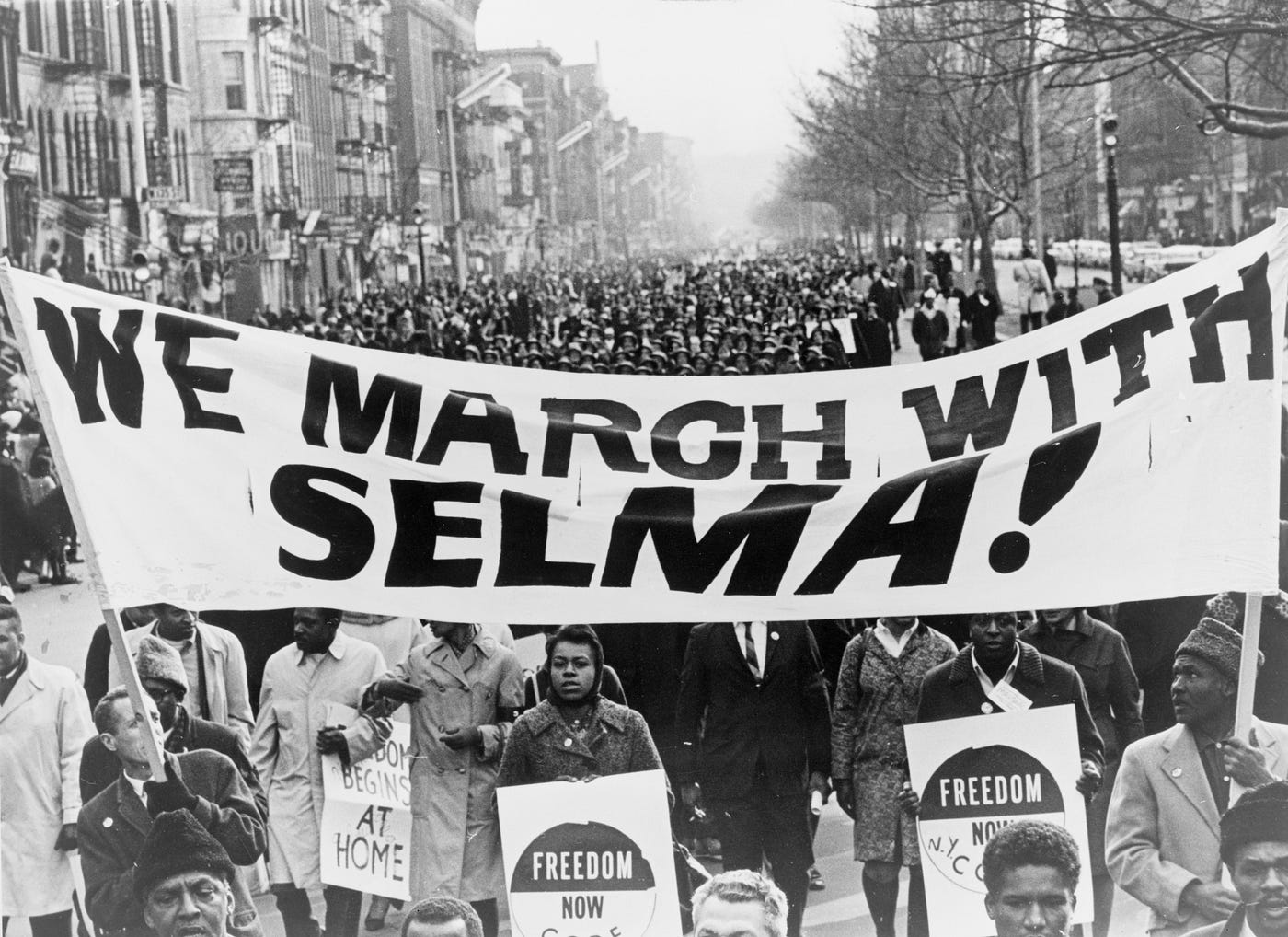
The Civil Rights He Fought For
At its core, King’s work centered on dignity—on the idea that every person deserves equal protection, opportunity, and respect under the law. The civil rights movement sought not special treatment, but fairness where none existed.
King and his contemporaries fought for:
- Voting rights, challenging poll taxes, literacy tests, and intimidation tactics designed to silence Black voters
- Desegregation, confronting laws and practices that enforced racial separation in schools, housing, transportation, and public spaces
- Equal employment opportunities, opposing discrimination that limited access to jobs, fair wages, and economic mobility
- Legal protection under the Constitution, insisting that civil rights were not privileges granted by the powerful, but rights guaranteed to all
These efforts helped lead to landmark legislation, including the Civil Rights Act of 1964 and the Voting Rights Act of 1965. These laws did not eliminate racism or inequality, but they dismantled many of the legal structures that upheld segregation and disenfranchisement.
King also understood that civil rights were inseparable from economic justice. In the final years of his life, he increasingly spoke about poverty, labor rights, and the moral failure of a society that allowed vast inequality to persist alongside abundance.
Why This Holiday Matters Today
Martin Luther King Jr. Day holds particular weight in today’s political and social climate. While the legal landscape has changed since the 1960s, many of the underlying issues King confronted remain unresolved.
Debates over voting access, racial equity, economic disparity, education, and civil liberties continue to shape public discourse. For many communities, progress has been uneven—marked by advances in some areas and regression in others. The promise of equality under the law still feels aspirational rather than fully realized.
This holiday matters because it resists complacency. It reminds us that progress is not inevitable, and that rights once secured can be weakened or lost without vigilance. King’s work challenges the comforting myth that justice naturally unfolds over time. Instead, it insists that justice requires sustained effort, courage, and participation.
Importantly, King’s legacy also warns against selective memory. He is often remembered for his most hopeful words, but less frequently for his critiques of systemic injustice, militarism, and economic exploitation. Honoring his legacy means engaging with the full scope of his message—not just the parts that feel easy or reassuring.
Nonviolence, Accountability, and Moral Courage
One of King’s most enduring contributions was his unwavering commitment to nonviolence—not as passivity, but as disciplined resistance. Nonviolence demanded courage, organization, and moral clarity. It required participants to absorb injustice without becoming unjust themselves.
This philosophy remains relevant today. In an era marked by polarization and fear, King’s approach reminds us that how change is pursued matters as much as the change itself. Accountability, empathy, and integrity are not weaknesses; they are foundations for lasting progress.
King believed that individuals had a responsibility not only to oppose injustice, but to actively support justice. Silence, he argued, was not neutral. It carried consequences.
Hope Grounded in Responsibility
Martin Luther King Jr. Day is, ultimately, a day of hope—but not naïve optimism. It is hope grounded in responsibility. King did not believe that the arc of the moral universe bent toward justice on its own. He believed it bent because people pushed it.
That push does not look the same for everyone. It can take the form of listening, learning, voting, teaching, organizing, or challenging unfair systems within our own spheres of influence. It begins with recognizing shared humanity and rejecting the idea that inequality is inevitable or acceptable.
This holiday invites us to consider what equity and equality truly mean—not as abstract ideals, but as lived realities. It asks us to imagine a society where opportunity is not predetermined by race, wealth, or background, and to acknowledge the work required to build it.
A Day to Remember—and to Commit
Martin Luther King Jr. Day is not a conclusion. It is a reminder.
A reminder of a man who believed deeply in the power of conscience.
A reminder of a movement that changed the nation through collective action.
And a reminder that progress depends on participation.
As we reflect on King’s life and legacy, we are invited to hold both truth and hope at the same time: to recognize how far we have come, and how far we still must go. The path forward is neither simple nor guaranteed—but it remains possible.
If we continue to strive toward equality and equity for all, with honesty and determination, the future can be better than the present. That belief—quiet, resolute, and shared—is perhaps the most meaningful tribute we can offer.

Leave a comment