Every year on March 8, the world pauses to recognize International Women’s Day. It is a day that celebrates achievement, honors struggle, and reminds us that progress—while real—has never been automatic.
For me, this day carries a particularly personal meaning. I was born on March 8, International Women’s Day itself. Growing up, I learned early that the date of my birthday represented something much bigger than cake and candles. It symbolized generations of women who fought, organized, spoke up, and refused to accept limits placed on their potential.
That history matters. And the future it points toward matters even more.
Where International Women’s Day Began
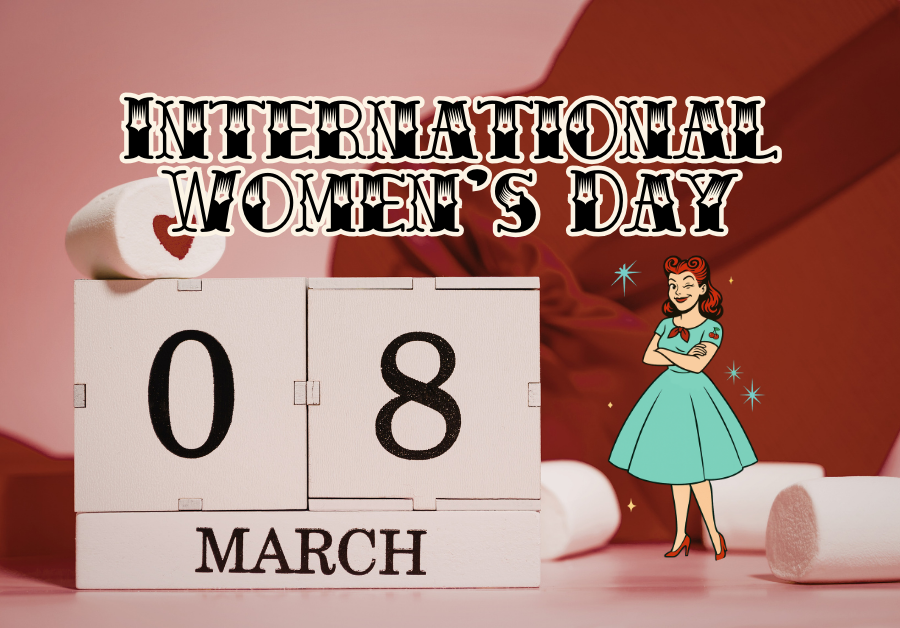
International Women’s Day did not start as a symbolic celebration. It began as a movement.
In the early twentieth century, women across the world were organizing around issues that affected their daily lives: voting rights, labor conditions, wages, and basic human dignity. In 1908, women garment workers in New York marched to protest unsafe conditions and unfair pay. Their activism helped spark a broader movement.
A few years later, the idea of a global day recognizing women’s rights and contributions gained traction through the work of activists like Clara Zetkin, who advocated for an international day of solidarity among women. By 1911, International Women’s Day was being observed across multiple countries.
What began as protest evolved into recognition, and recognition evolved into a worldwide commitment to advancing equality.
In 1975, the observance gained global momentum when the United Nations officially began celebrating International Women’s Day, reinforcing the idea that gender equality was not merely a social issue but a fundamental human right.
Why the Day Still Matters
Some people ask whether International Women’s Day is still necessary. After all, the world has changed dramatically over the past century.
Women vote. Women lead companies. Women serve as heads of state, scientists, artists, and innovators.
But progress is not the same as completion.
The purpose of International Women’s Day is not to suggest that women are powerless. It is to acknowledge that the journey toward equality—across gender, race, class, and identity—remains unfinished.
History teaches us something important: rights and opportunities expand only when people are willing to keep pushing forward.
International Women’s Day exists to remind us that equality is not something achieved once and then forgotten. It is something maintained through vigilance, empathy, and collective responsibility.
Leadership, Equality, and the Meaning of Progress
At its heart, the message of International Women’s Day is simple: every person deserves the opportunity to live with dignity, contribute their talents, and pursue their aspirations without artificial barriers.
Equality does not mean uniformity. It does not erase differences. Instead, it affirms that our differences should never determine our worth.
The struggle for gender equality has always been part of a larger human story—the story of expanding opportunity and recognizing the inherent value of every individual.
And when societies commit to that principle, everyone benefits.
When women gain access to education, economies grow stronger.
When workplaces embrace fairness, innovation expands.
When leadership reflects the diversity of the communities it serves, decision-making becomes wiser and more humane.
The progress made through women’s movements has lifted not only women, but families, communities, and entire nations.
A Personal Connection
Because I was born on International Women’s Day, March 8 has always felt like more than a calendar date to me. It is a yearly reminder that each of us is connected to something larger than ourselves.
It reminds me that the freedoms and opportunities many of us enjoy today were not handed down easily. They were built by people who were brave enough to challenge systems, demand fairness, and imagine a better future.
That spirit of determination—the willingness to stand up for dignity and fairness—is something I carry into every aspect of my life and work.
Equality in Everyday Spaces
Sometimes conversations about equality feel abstract, as if they only belong in government halls or global organizations.
But equality lives in everyday spaces too—in workplaces, communities, and the moments when people choose whether to treat one another with respect.
In my own corner of the world, that philosophy shapes the culture of Cherry Pop Events.
At Cherry Pop Events, we believe celebrations should reflect the best of humanity. That means every person we work with—clients, vendors, guests, and collaborators—is treated with integrity, dignity, and respect.
Love, in all its forms, deserves to be honored without judgment.
That commitment is not a marketing statement. It is a guiding principle. We believe every event should be a place where people feel safe to celebrate who they are and who they love.
And as a company, we will continue pushing equality forward in whatever capacity we can—through the way we conduct business, the partnerships we build, and the environment we create around every celebration we help bring to life.
Looking Toward the Future
International Women’s Day is not only about looking back. It is about asking what kind of future we want to build.
The next chapter of equality will not be written by one movement alone. It will require cooperation across communities, industries, and cultures.
It will require leaders who listen.
Institutions willing to evolve.
And individuals who choose empathy over division.
The work of equality has always expanded outward—from gender equality to broader conversations about fairness, access, and human dignity for all people.
That expansion is not a departure from the spirit of International Women’s Day. It is its natural evolution.
Because the same principle that inspired early advocates still guides us today: the belief that a just society is one in which everyone has the chance to thrive.
Why We Continue to Honor March 8
International Women’s Day matters because it keeps us grounded in both memory and responsibility.
It reminds us of the courage of those who fought for opportunity when the odds were stacked against them.
It asks us to recognize the progress that has been made.
And it challenges us to keep moving forward—not only for women, but for every person whose dignity deserves recognition.
For me, the day will always carry personal meaning.
But more importantly, it carries a collective promise: that we will continue striving for a world where equality is not aspirational, but ordinary.

Leave a comment